
Winners and Losers by Sidney J. Harris is a collection of short, pithy aphorisms about what it means to be a good person and to live a good life. The book is out of print and Harris is long dead, so as a fan of his work I’ll be uploading a few scanned pages every Sunday until I run out. Harris and his publisher retain all copyright.
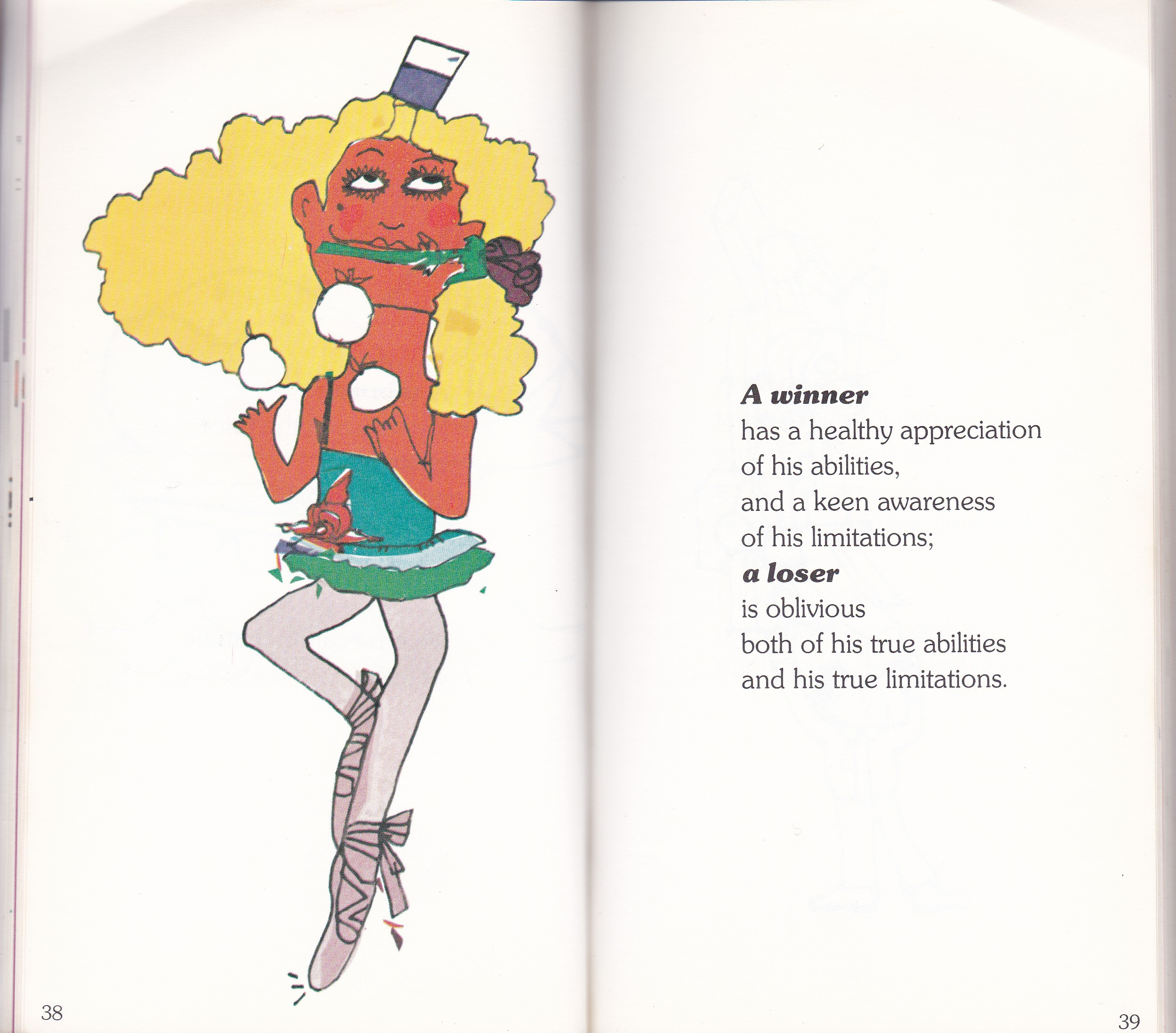
A winner has a healthy appreciation of his abilities, and a keen awareness of his limitations;
a loser is oblivious of both his true abilities and his true limitations.
Maybe I’m biased here, but unlike most of the aphorisms in this book I feel like this one isn’t really about character at all, it’s just IQ. Every very capable person I’ve ever known has possessed a pretty accurate idea of his abilities and limitations, and the less capable tended to as well. Maybe this is more true today than it was in Harris’s time — we’ve gotten better at running the Sort, people tend to find their level and are hyper-aware of where it is. Today only real idiots have a self-image badly out of sync with their actual abilities.
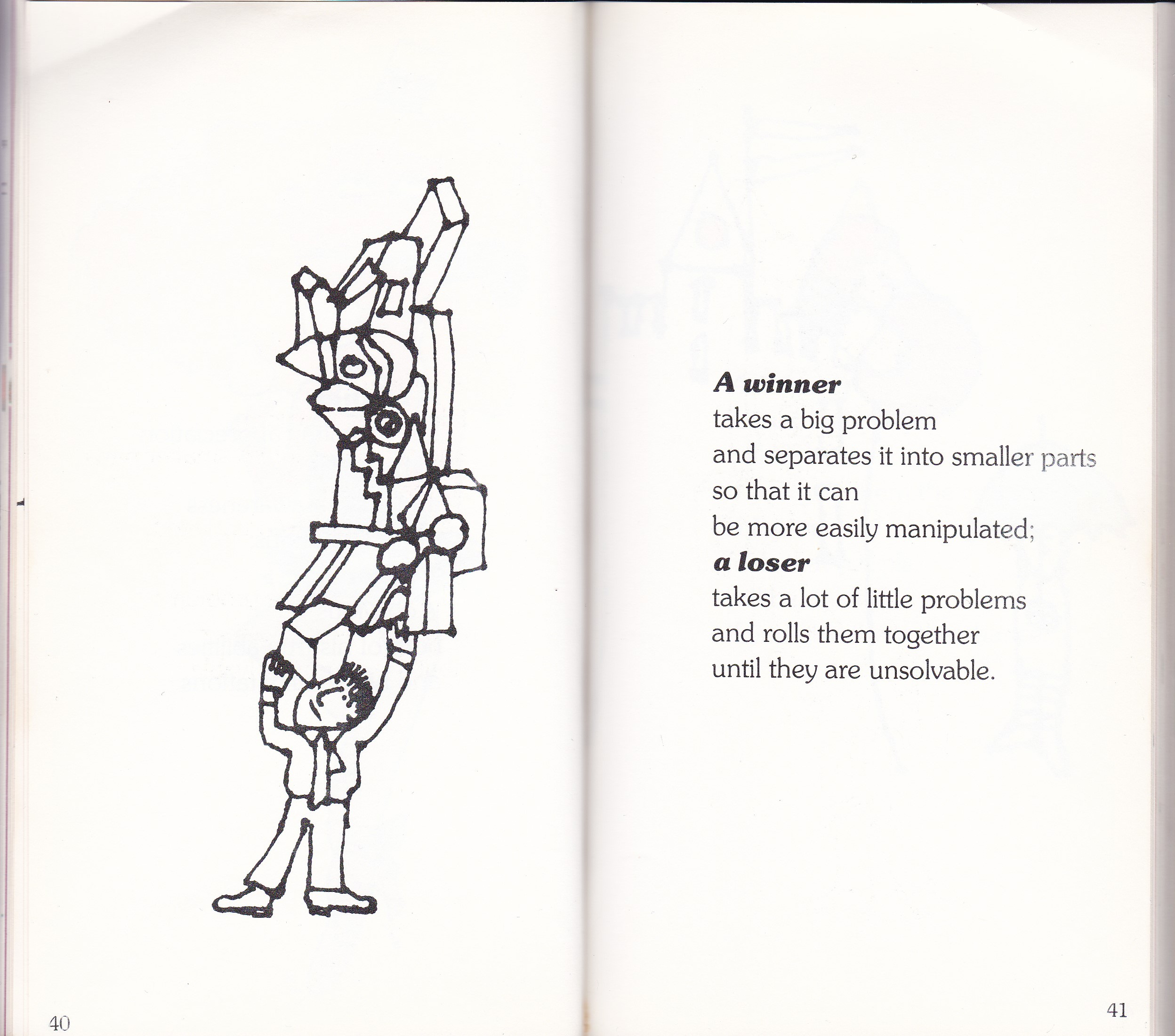
A winner takes a big problem and separates it into smaller parts so that it can be more easily manipulated;
a loser takes a lot of little problems and rolls them together until they are unsolvable.
Most of these sayings apply pretty equally to both men and women in most contexts, but this is the rare counterexample that seems strongly gendered to me. Here Harris is speaking about analytical ability — analysis is from the Greek for “loosening up”, breaking something down into parts; its opposite is synthesis, “bringing together”. Men are generally quite a bit better at analytical modes of thought and action than women (I said generally, please don’t yell at me). I’ve often noticed the “loser” tendency in the women in my own life, including my own dear Mrs. Kitten, and it’s maddening to deal with. So to some extent Harris is simply describing masculine virtue, which makes this less applicable than I imagine he wanted it to be. But there are of course easy-to-do steps that analytically-challenged people can take to improve on this, such as making detailed lists and checking items off, so I’ll give him a pass.
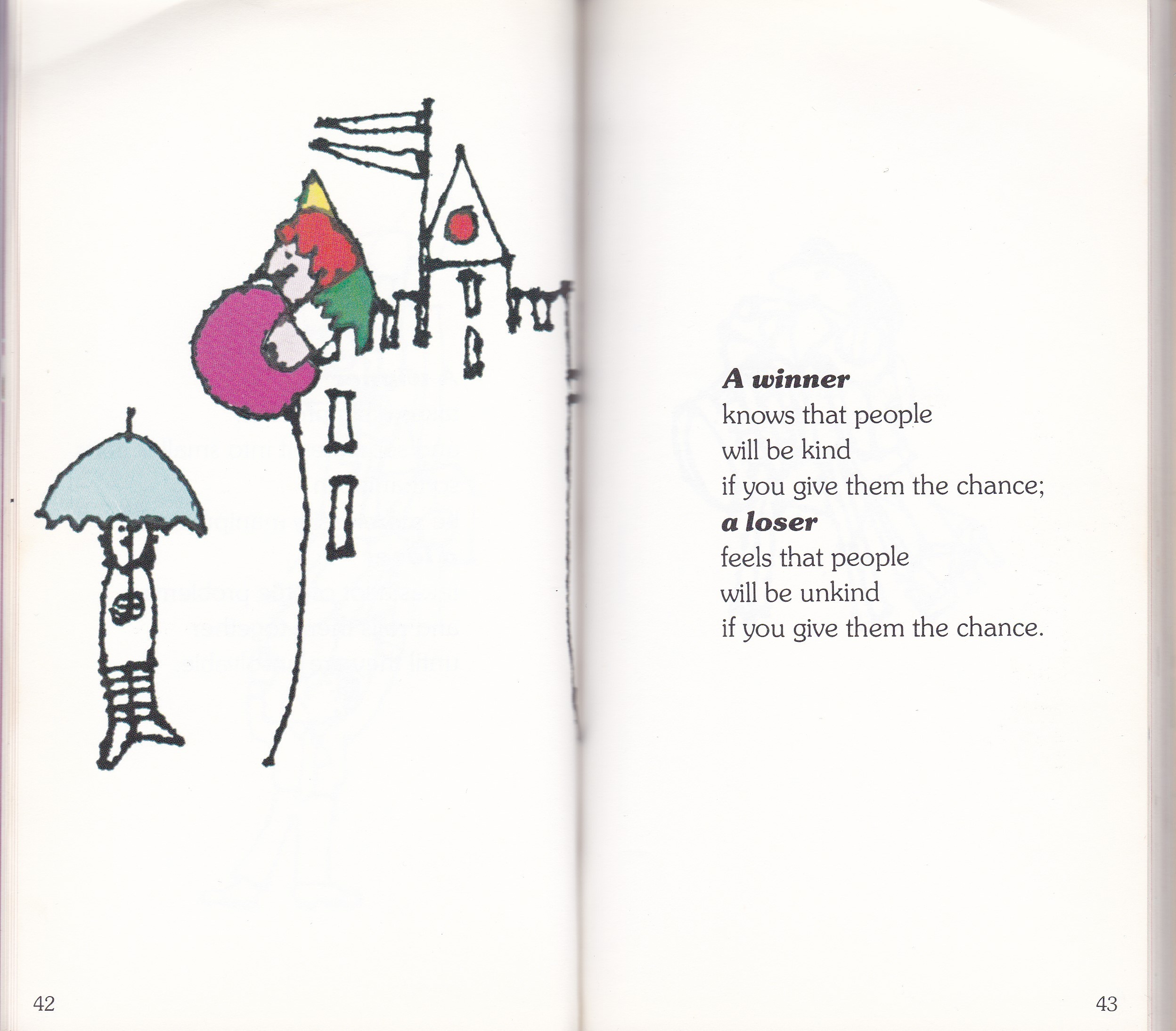
A winner knows that people will be kind if you give them the chance;
a loser feels that people will be unkind if you give them the chance.
This is the 60s liberal in Harris asserting itself, and also a good working definition of a high-trust society. I generally feel this way, despite being frequently disappointed and occasionally taken advantage of. It’s the optimist in me.
Before applying this advice in your own life, poke your head up for an honest assessment of whether you live in a high-trust community.
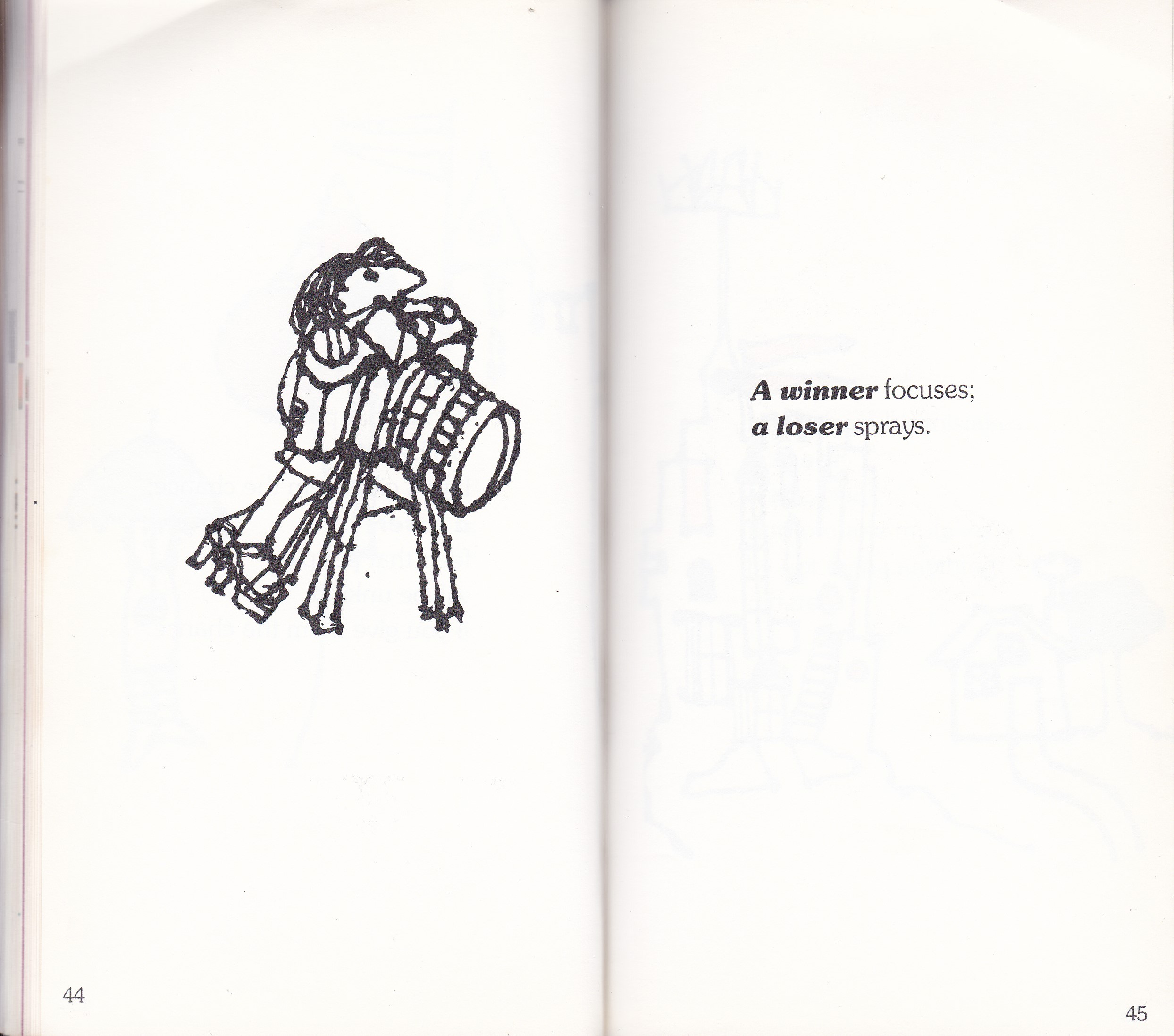
A winner focuses;
a loser sprays.
Harris wrote a daily newspaper column for decades, in addition to the book here and several others. I tend to think of this advice as being about consistently applying effort to the same things, day after day and year after year, rather than limiting your scope to a narrow set of pursuits. Stephen King famously writes around 1,000 words every morning as his daily routine. That’s about two single-spaced pages (this post is around 600 words). After 50 or 100 days of that, he has a novel. He’s written 85 so far.
That’s all for this week. Forgive the intermission for the Christmas season, when I was frequently traveling with family and away from the flatbed scanner I use to upload these images. I’ll resume the normal Sunday schedule for this feature beginning today.